Turn your old wall switches into smart Zigbee switches
Zigbee Wall Switches
- Compatible with any latching/rocker wall switch
- Battery-powered, so no neutral wire required
- More affordable than existing smart switch solutions
How Does It Work?

The key component of this project is the Aqara Door & Window Sensor.
These compact Zigbee-enabled sensors detect when a magnet opens or closes an electrical circuit. Interestingly, you can bypass the magnet and manually trigger the sensor by opening and closing the circuit with a switch.
The sensor's circuit board is small enough to fit behind any standard wall switch, making it an excellent candidate for this modification.
Inside the Sensor

By connecting the GND and DI+ contacts, the sensor registers a "closed" state (similar to a closed door/window). When disconnected, it detects an "open" state. You can leverage these states in your home automation setup to control lights or other devices.
Assembly Guide
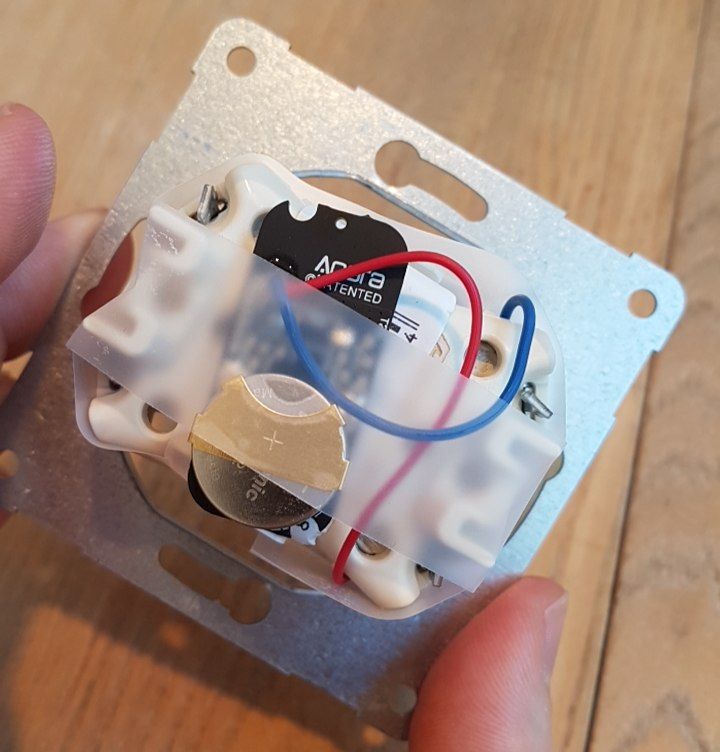
- Solder one wire to the GND contact and another to the DI+ contact.
- Connect these wires to your wall switch.
- Secure the sensor behind the switch using tape or glue.
- Inside the wall, permanently connect the original light wiring to ensure the circuit remains powered.
- Reinstall the modified switch in the wall.
- Use your preferred automation software to bind the switch to a light or another device.
Software Compatibility
I used the following software for my setup:
This setup may also work with other home automation platforms, including the Aqara Hub, depending on whether it can translate a sensor event into a light on/off event.
Conclusion
At the time of writing, these sensors are very affordable—around €7 per unit—making them one of the cheapest ways to convert traditional switches into smart ones. However, there are some trade-offs to consider:
Pros:
- ✔️ Budget-friendly alternative to commercial smart switches
- ✔️ No neutral wire needed, making installation easier in older homes
- ✔️ Integrates with Zigbee ecosystems for automation flexibility
Cons:
- ❌ Battery replacement is inconvenient—you’ll need to remove the entire switch to access the sensor. However, the battery should last about two years, according to Aqara.
- ❌ Requires a coordinator—unlike native Zigbee switches, which can communicate directly with lights, this setup relies on a hub or software (like Home Assistant) to process sensor events and trigger light changes.
Despite these downsides, I’ve been happily using this solution in my home. If you’re looking for a cost-effective way to upgrade your existing switches, this might be worth trying!
No comments yet
// Your email address will not be published.